
Showcasing Achievements and Future Vision of Cooperation among International Organizations, Governments, and Civil Society for Peace
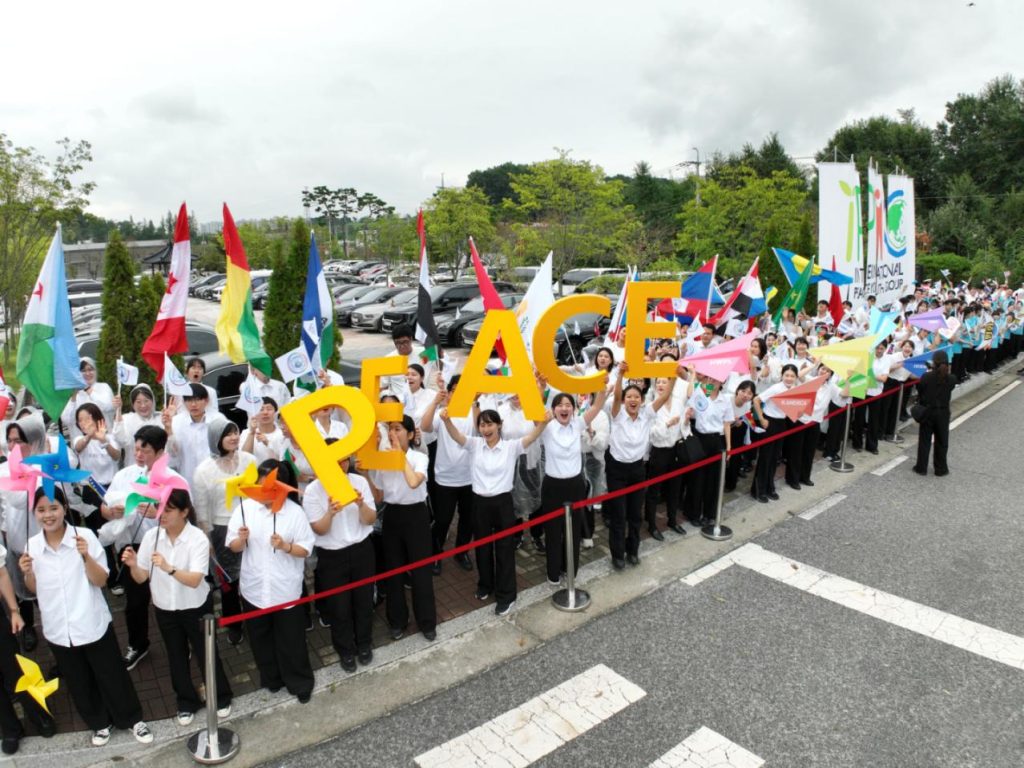
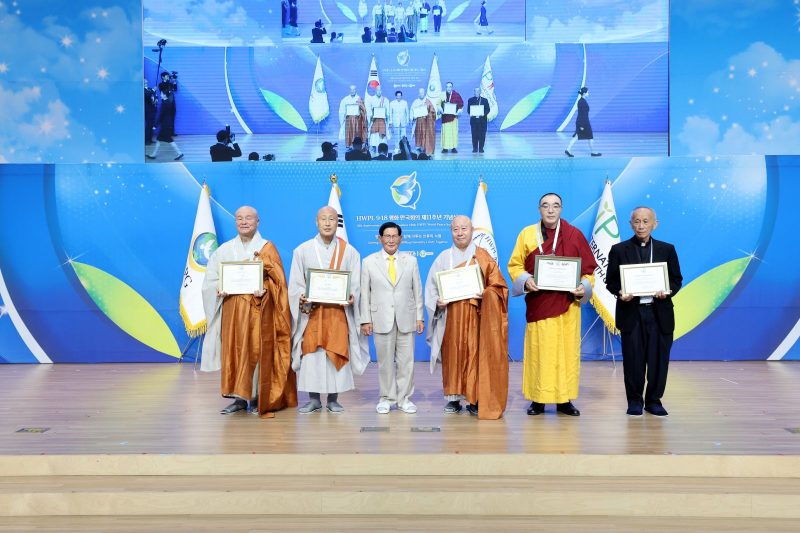
Cheongju, Republic of Korea — September 18, 2025 — Heavenly Culture, World Peace, Restoration of Light (HWPL), an international peace NGO based in South Korea, hosted the 11th Anniversary of the September 18th HWPL World Peace Summit on September 18–19 in Cheongju under the theme “Uniting for Peace and Fulfilling Humanity’s Duty Together.” The commemoration will continue across 78 major cities worldwide through October.
This year’s summit gathered more than 800 global leaders—including former and current presidents, prime ministers, speakers of parliament, chief justices, cabinet ministers, and leaders in education, religion, media, and youth sectors—who voluntarily traveled to Korea, demonstrating expanding global support for HWPL’s peace initiatives.
Since the inaugural HWPL World Peace Summit in 2014, the organization has pledged practical approaches for conflict resolution through international law, interfaith cooperation, and peace education. At this 11th anniversary, HWPL presented its key achievements from the past year, notably the development of public–private partnership models for embedding sustainable peace within diverse national contexts.
A central agenda item was the global expansion of support for the Declaration of Peace and Cessation of War (DPCW), HWPL’s proposed legal framework to end wars and establish lasting peace. The DPCW sets out principles such as the prohibition of the use of force, conflict prevention and mediation, and ensuring sustainable peace.
Over the past year, 17 international and regional bodies—including the Latin American and Caribbean Parliament (PARLATINO), the legislatures of Paraguay, the Dominican Republic, and South Sudan, as well as local governments in the Philippines, Mongolia, the U.S. state of Georgia, Madagascar, Mali, and India—adopted resolutions in support of the DPCW.
Chairman Lee Man-hee of HWPL emphasized global cooperation for peace, saying, “Conflict can never be good. Only the achievement of peace is truly good. If we fail to establish a peaceful world in our time, we will burden future generations with conflict. What we leave behind must be a world of peace, not one of conflict. The work before us today is to commit ourselves to acts of goodness.”
Former President of Croatia H.E. Ivo Josipović gave congratulatory message saying, “all of us must be aware that our activity for banning war throughout the world is more important now than ever.” and stressed that this year’s achievements are the guarantee that humankind will one day achieve eternal peace.
This year’s summit also welcomed a delegation of five representatives from Fiji, drawing significant attention from the Pacific region. The delegates included Mr. Adam Zoran Ali, Head of Interface Search Fiji (Religious Union Association); Rev. Esira Salusalu Tunidau, Pastor of the Assemblies of God (AOG) Church; Mr. Bimal Deo, Head of Lautoka Scouts and Messenger of Peace; Mr. Amrit Prakash Sharma, Vice Principal of AOG High School; and Mr. Ioane Nawaikula, Secretary-General of the National Youth Council of Fiji (NYCF).
On September 19, the delegation participated in the “Hope in Fiji – Itaukei Project” roundtable meeting, where they discussed tailored peace initiatives for Fiji’s youth and communities. Key outcomes included agreements to advance the Itaukei Peace Education Program to preserve language and identity while teaching values of peace, the Religious Leaders’ Peace Leadership Program to foster interfaith harmony, and a Peace Drawing Contest for South Pacific youth in Fiji, Papua New Guinea, Kiribati, Tuvalu, and Tonga to create artworks based on HWPL’s 12 peace education curricula. The Fijian representatives resolved to implement these programs upon returning home in collaboration with the HWPL Fiji branch.
In their reflections, the Fijian delegates also shared practical insights. Mr. Amrit Prakash Sharma emphasized the importance of peace education in Fiji’s unique island context, suggesting that an online format and a Peace Drawing Contest for primary school students be launched within this year. Mr. Bimal Deo expressed deep respect for HWPL’s work, noting that even media, guides, and interpreters serve voluntarily, and was appointed as an advisor to the HWPL Fiji branch. He also stressed that past ethnic conflicts between iTaukei and Indo-Fijians should be left behind as communities move forward together in peace. Mr. Ioane Nawaikula said he was impressed by HWPL’s commitment to peace, and held detailed discussions on how youth policies and international cooperation could be practically advanced, reviewing feasibility, potential costs, and partnerships with organizations such as UNDP.
In the religious sector, the launch of the Solidarity of Religions’ Peace Committee (SRPC) was highlighted as a milestone. HWPL currently operates 292 WARP Offices across 132 countries, facilitating scripture-based dialogue and interfaith discussions. Since 2023, the HWPL International Religious Peace Academy has been implemented as an interfaith learning program, formally recognized in several countries as a platform for leaders and citizens to engage in peace-centered dialogue.
In education, progress was made in institutionalizing HWPL Peace Education into public school curricula. Zambia introduced the program across schools in its capital Lusaka, and announced plans for nationwide expansion in cooperation with the Ministry of Education. Mongolia also reported advancements in integrating HWPL Peace Education into both lifelong learning institutions and public education.
At the Global Peace Education Conference, Mr. Ian Miyoba, Director of Education Policy at Zambia’s Ministry of Education, stated, “Through peace education, we are amplifying citizens’ voices for peace and fostering a culture of peace. It can prevent issues like child rights violations, child marriage, and drug use, creating tangible change in the community. That’s what makes the HWPL Peace Education so unique and why it was the perfect fit for Zambia.”
The summit also featured the 2025 International Conference on Preparing for Peaceful Korean Reunification, where discussions centered on “Inter-Korean Free Movement Through Public-Private Partnership.” Following the launch of the Preparatory Committee for Peaceful Unification on the Korean Peninsula (PCPUK) in March, this year’s conference discussed action plans focusing on inter-Korean exchanges, unification education, international cooperation.
Over the past year, HWPL’s global membership increased by 140,000, surpassing 580,000. HWPL Secretary-General Kang Tae-ho noted in his progress report, “Citizens worldwide, suffering from wars and conflicts, strongly yearn for genuine peace beyond the current order. This collective aspiration has directly led to the rapid growth of HWPL’s membership.”
While the Cheongju summit served as the centerpiece, HWPL emphasized that anniversary events will continue in 78 countries through October. More than 15,000 leaders from international organizations, governments, and civil society are expected to participate in in-depth discussions on long-term strategies for sustainable peace, tailored to their respective national contexts.