
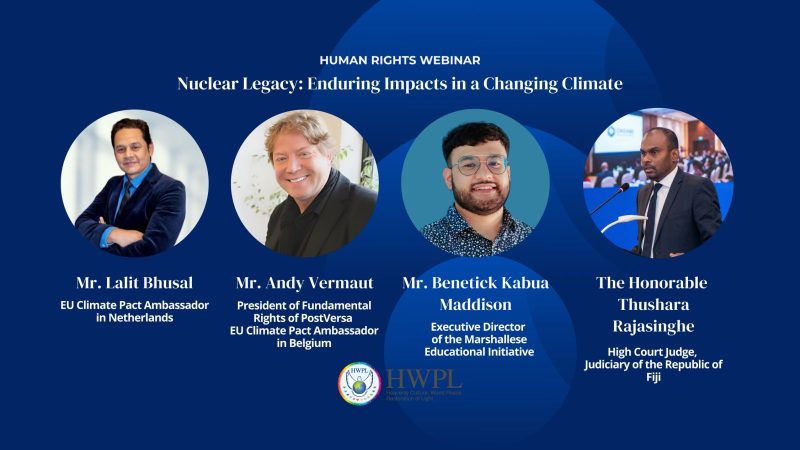
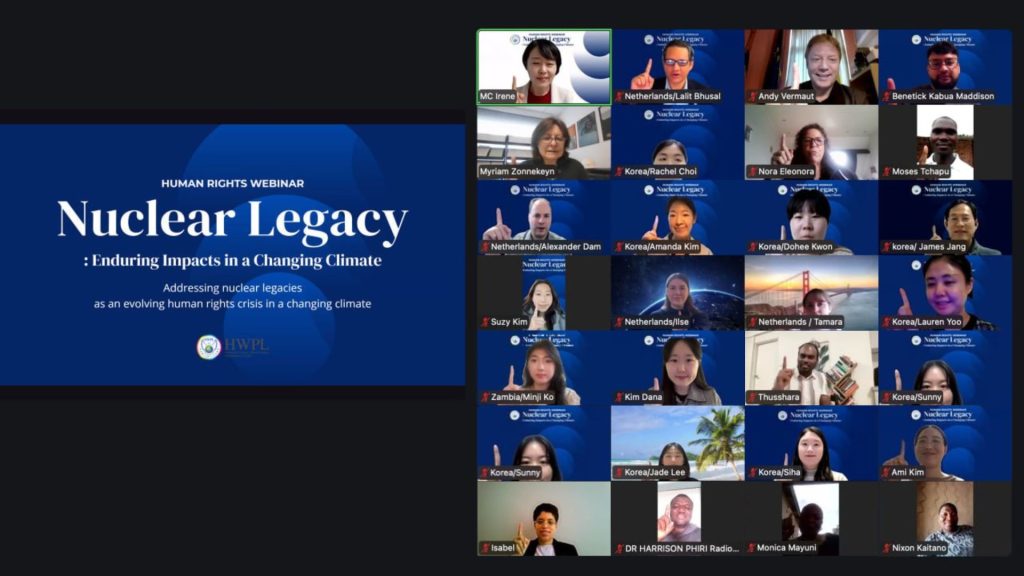
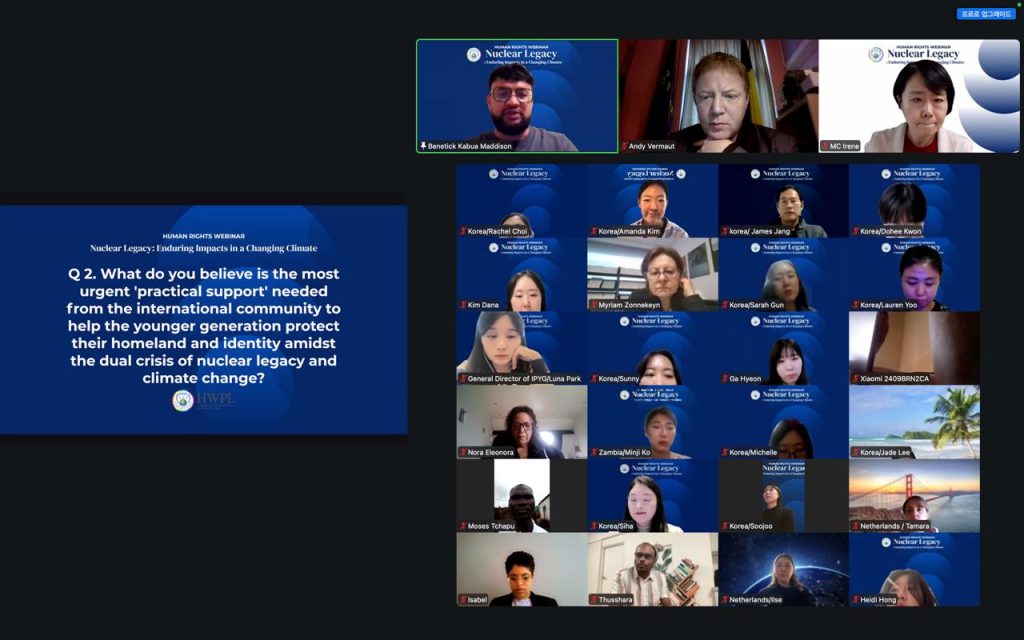
MAJURO, Marshall Islands — In a historic show of intercontinental solidarity, representatives from every inhabited continent convened via an international webinar on February 28, 2026, to address the escalating human rights crisis arising from nuclear contamination compounded by climate change in the Marshall Islands. Held on the eve of Nuclear Victims and Survivors Remembrance Day (March 1)—which marks the anniversary of the 1954 ‘Castle Bravo’ hydrogen bomb test—the dialogue underscored that the islands’ nuclear legacy is no longer a localized issue, but an emerging global environmental and security concern.
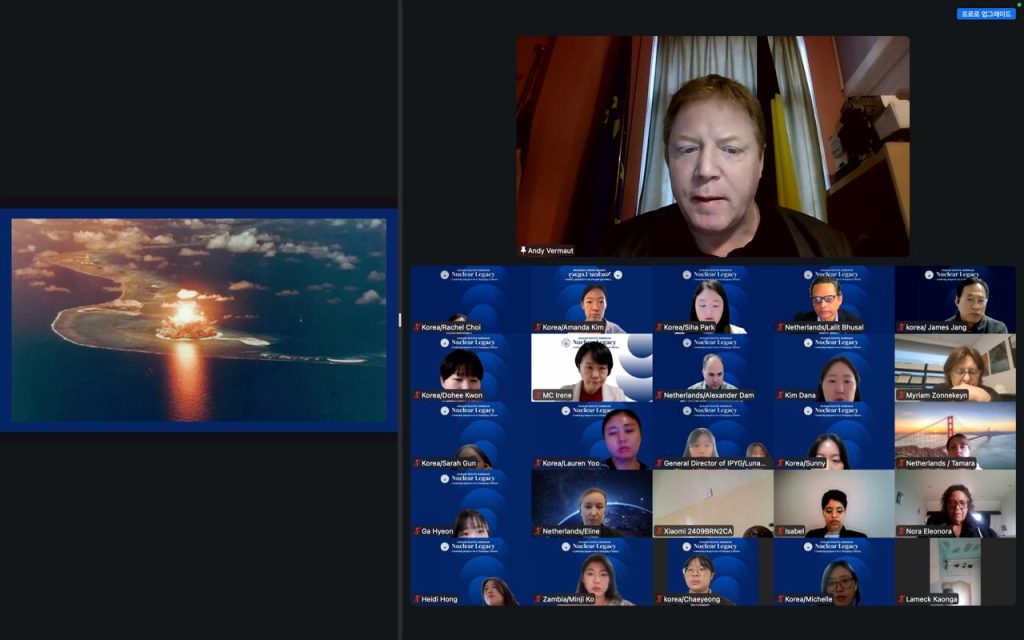
Between 1946 and 1958, the United States conducted 67 nuclear tests in the Marshall Islands. Today, rising Pacific sea levels threaten to compromise contaminated sites—most notably the Runit Dome on Enewetak Atoll—raising urgent concerns that radioactive debris may re-enter marine ecosystems, further compounding already severe climate vulnerabilities faced by local communities.
The event was convened by Heavenly Culture, World Peace, Restoration of Light (HWPL), an international peace NGO, and served as a digital platform connecting voices from the Pacific, Europe, Asia, Africa, and the Americas to call for coordinated international action.
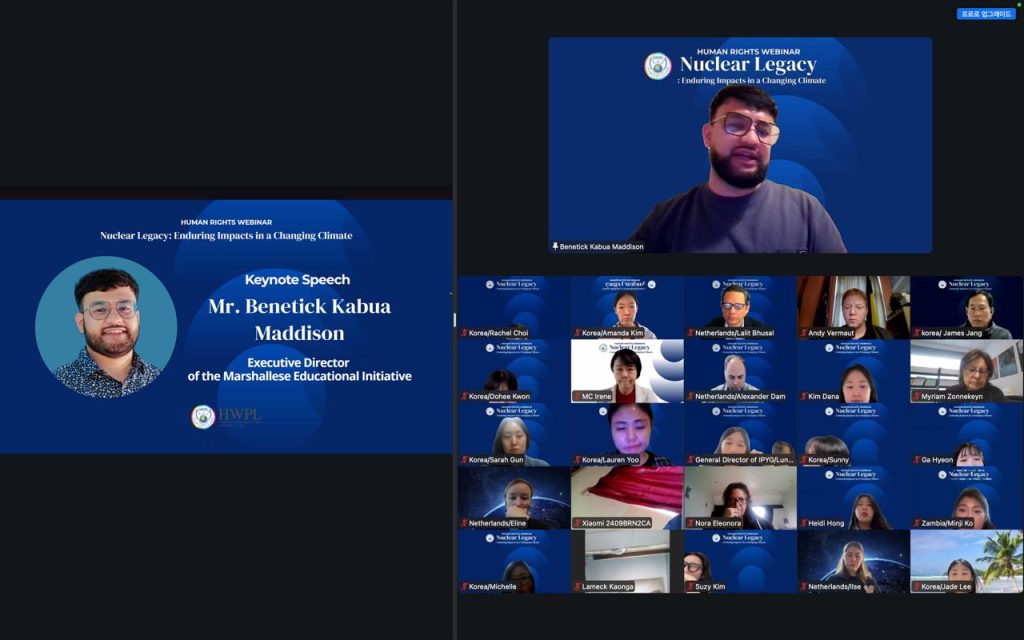
“The world is witnessing a ‘double tragedy’ in real-time,” stated Mr. Benetick Kabua Maddison, Executive Director of the Marshallese Educational Initiative (MEI). “By connecting with allies across all continents today, we are making it clear: the unresolved nuclear contamination in the Marshall Islands, combined with the climate crisis, constitutes a global security concern. This is about our right to a safe future, and the world can no longer look away.”
Hon. Hiroshi Vitus Yamamura, Member of Parliament and former Minister of Public Works, praised the resilience of the Marshallese people while emphasizing the urgent need for global technical and legal cooperation to mitigate the long-term health and environmental impacts of the nuclear testing era.
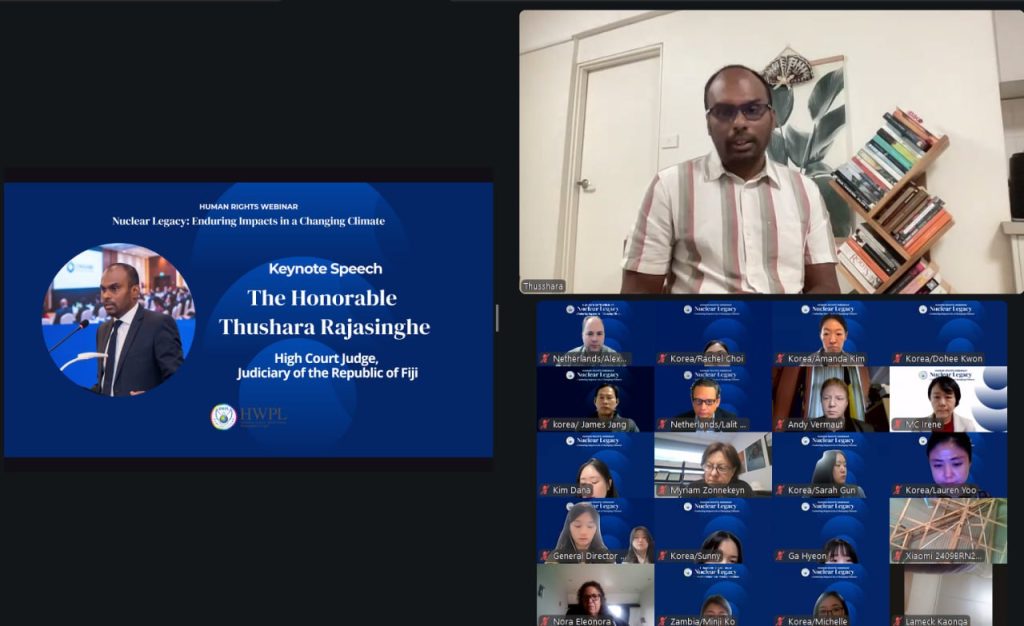
From a legal perspective, Honourable Justice Thushara Rajasinghe of the High Court of Fiji underscored that state responsibility for environmental harm does not diminish with time. He called for the development and implementation of practical legal frameworks to ensure accountability and preventive protection against climate-induced nuclear risks.
Reflecting international solidarity, EU Climate Pact Ambassadors Mr. Lalit Bhusal (Netherlands) and Mr. Andy Vermaut (Belgium) highlighted the critical role of civil society in elevating this often-overlooked crisis within the global climate justice agenda.
The dialogue concluded with a unified call for the international community to move beyond rhetoric and commit to coordinated technical, legal, and financial mechanisms to secure contaminated sites and prevent irreversible environmental consequences.
Source:HWPL