
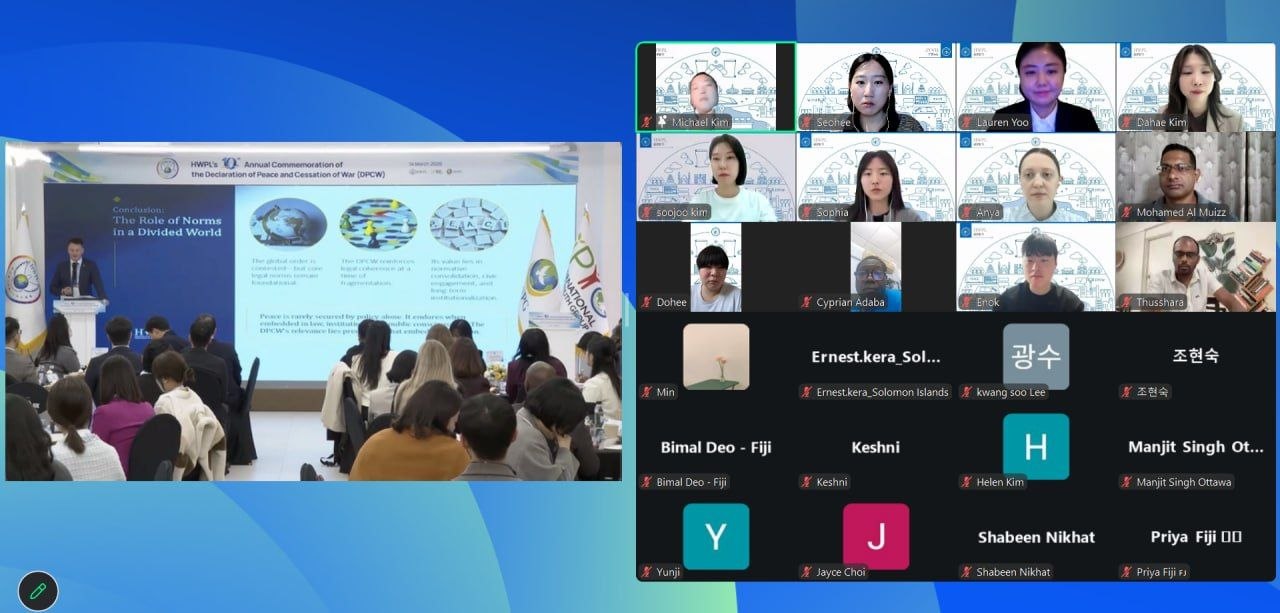
HWPL Global Branch 11 held the “HWPL Peace Network Meeting – Commemorating the 10th Anniversary of the DPCW” via Zoom at 2 p.m. Fiji time on April 4. Under the theme, “Woven in Unity: Crafting in the Pacific Way of Peace,” the event was organized to reflect on the achievements of the past decade since the proclamation of the Declaration of Peace and Cessation of War (DPCW) and to explore directions for institutionalizing peace in the South Pacific.
The meeting focused on sharing the achievements built upon the DPCW, while highlighting the significance of peace institutionalization, international understanding, and the spread of a culture of peace through education and civic participation. It was also designed as a platform to examine the DPCW as a cooperative framework for the future of the South Pacific amid climate challenges and shifting regional dynamics.
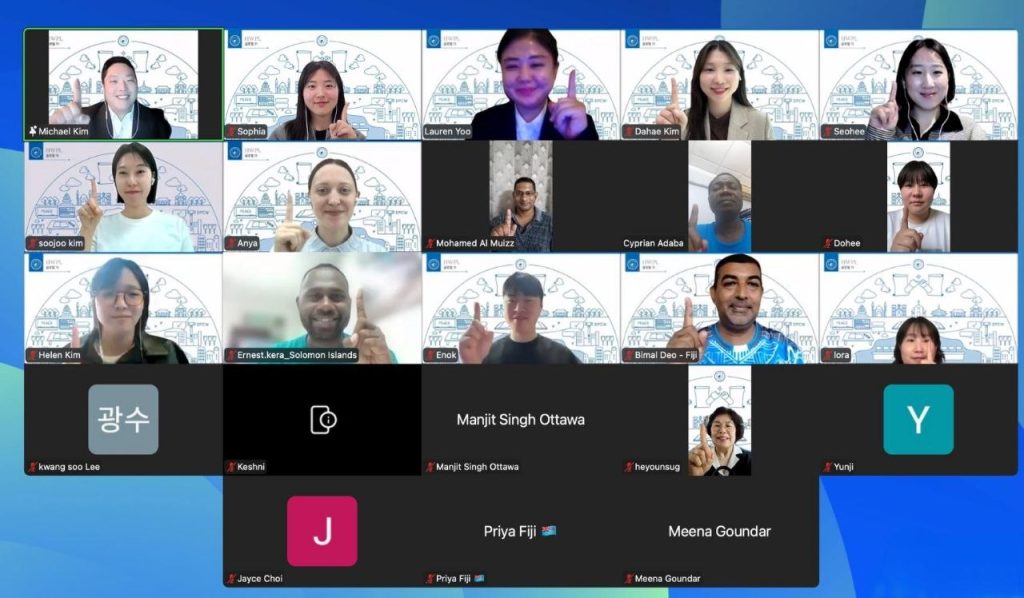
The event began with welcoming remarks by moderator Michael Kim and opening remarks by Dahae Kim, Branch Manager of HWPL Global Branch 11, followed by the screening of “DPCW: a Decade of Progress.” A video featuring presentations by Mr. Robert Koroma, Counsellor at the Mission of the Republic of Sierra Leone to the UN in Geneva, and Prof. Dr. Ciaran Burke of Friedrich-Schiller University Jena was then shown. This was followed by presentations from Justice Thushara Rajasinghe and Ms. Anya Marchenko, Branch Manager of the HWPL Fiji Branch (Global Branch 11). The event concluded with an appeal for support for the DPCW and a “We are One” group photo.
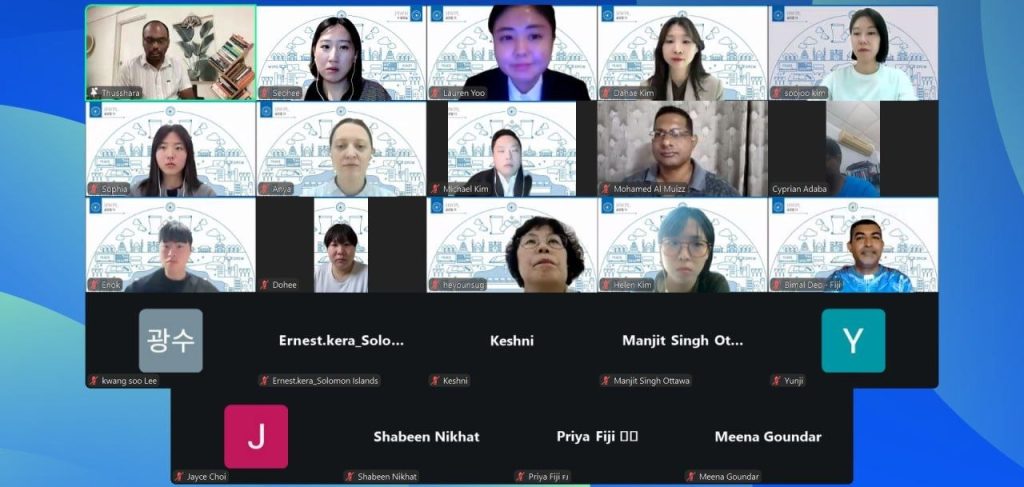
In the video presentation, Mr. Robert Koroma referred to the unanimous adoption of UN Human Rights Council Resolution 55/17, “Human Rights and a Culture of Peace,” on April 4, 2024, explaining that the DPCW served as one of its foundations. He also introduced HWPL Switzerland Branch’s Peace Education for Diplomats, describing it as a meaningful effort to spread principles of peace among diplomats involved in shaping international law and policy, and to help build preventive legal and institutional foundations for peace rather than relying only on post-conflict responses.
Prof. Dr. Ciaran Burke, in turn, pointed to the war in Ukraine, the hostilities in Gaza, instability in Sudan, and the paralysis of the UN Security Council as signs that the normative consensus of the international order is under pressure. He explained that the DPCW reaffirms and reinforces core principles of international law, including the prohibition of the use of force, the peaceful settlement of disputes, self-determination, and the protection of human rights. He further emphasized the importance of civic participation and education, noting that the DPCW can serve as a normative reference point linking law, institutions, and public consciousness in an age of fragmentation.
Justice Thushara Rajasinghe of the High Court of Fiji delivered a presentation under the theme “Why Peace Must Be Institutionalized.” His presentation addressed the need to institutionalize peace by drawing on examples of institutionalized responses to climate change, the importance of strengthening the effectiveness of ICJ judgments, and the relevance of peace institutionalization to key regional issues in the South Pacific, including climate change, HIV, and drug-related challenges.
One participant shared, “Warmest greetings and best wishes from Fiji as we celebrate a decade of promoting peace, harmony, and global cooperation. May the spirit of the Declaration of Peace and Cessation of War continue to inspire nations and individuals to work together for a world free of conflict.”
Participants viewed the meeting as an opportunity to reflect on the practical and cumulative achievements made since the declaration of the DPCW and to reconsider its future direction in the South Pacific. The event demonstrated a continued commitment to connecting the principles of international law, education, civic participation, and institutional practice in building a sustainable framework for peace.